

Portugal for Australians: complete travel guide 2026
No visa required, 24 hours from Sydney, outstanding value in Australian dollars: everything you need to know to plan your trip to Portugal from Australia.
documents
- Check your Australian passport is valid for at least 6 months beyond your travel dates
- Purchase comprehensive travel insurance with medical coverage: Medicare does not cover any treatment received outside Australia
- Check whether your credit card or employer includes travel insurance coverage and whether limits are sufficient
- Check the ETIAS status before departure (EU pre-travel authorisation expected in 2026)
transport
- Book flights from Sydney (SYD), Melbourne (MEL), Brisbane (BNE) or Perth (PER)
- Get an International Driving Permit (IDP) from an NRMA, RAA, RAC or RACQ branch if you plan to rent a car
accommodation
- Book accommodation (1-3 months ahead for peak Algarve season)
connectivity
- Check your Australian mobile plan's international roaming rates for Portugal
- Order a Portugal eSIM to avoid expensive roaming charges
equipment
- Pack a Type I to Type F plug adaptor (Australian plugs are not compatible with Portuguese outlets)
finances
- Notify your bank and credit card providers of international travel
Portugal has quietly become one of the most talked-about European destinations among Australian travellers, and it is easy to understand why. It offers the combination that Australians tend to seek in Europe: reliable sunshine, exceptional seafood, a relaxed pace, dramatic coastline and prices that feel genuinely affordable compared to what we are used to at home. Compared to France, Italy or the UK, Portugal delivers more for less on almost every measure.
For Australian travellers, a few important points set Portugal apart from the planning perspective. Your Australian passport is mandatory and should carry at least 6 months of validity beyond your travel dates. The 90-day Schengen rule applies and counts across all 27 Schengen countries, not just Portugal. Most importantly: Medicare does not cover any medical treatment received overseas, a fact the Australian Government is clear about but that many travellers still overlook. And roaming charges apply on Australian phone plans in Europe.
This 2026 guide covers everything Australian travellers need to know: entry requirements, travel insurance, a realistic budget in Australian dollars, flight options from Sydney, Melbourne, Brisbane and Perth, driving rules and practical tips verified specifically for Australian passport holders.
Entry requirements for Australian travellers to Portugal
- Valid Australian passport with at least 3 months validity beyond your planned Schengen departure date
- 6 months validity beyond travel dates strongly recommended by the Australian Government
- Proof of return or onward travel may be requested at the border
- Proof of sufficient funds may be requested at the border
- For stays over 90 days: long-stay visa required before leaving Australia
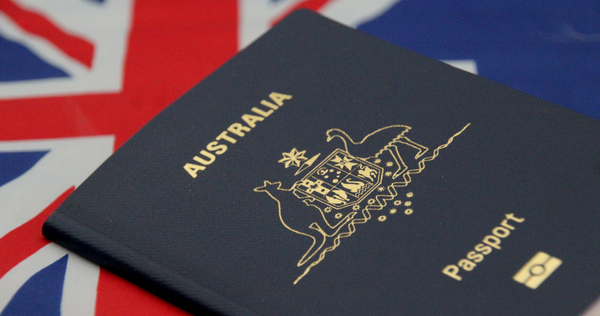
Australian citizens do not need a visa to visit Portugal for tourism or short stays. Australia and Portugal have a longstanding visa waiver arrangement under the Schengen framework. You show up with your passport and walk through, with no advance paperwork required.
Passport validity
Your Australian passport must be valid for at least 3 months beyond your planned departure date from the Schengen Area. The Australian Government's Smartraveller service recommends having at least 6 months of validity remaining beyond your travel dates to avoid any issues at check-in or the border. If your passport expires within 6 months of your travel dates, renew it before booking. The Australian Passport Office advises allowing several weeks for processing, and longer during peak periods.
The 90-day Schengen rule
This is the rule that most Australian travellers are unaware of until it affects their plans. As a non-EU citizen, you can spend a maximum of 90 days in the Schengen Area within any rolling 180-day period. The Schengen Area covers 27 countries: Portugal, France, Spain, Italy, Germany and more. Days spent in all of these countries count toward your running total. If you spend 3 weeks in Spain before flying to Lisbon, you have 69 Schengen days remaining. Track this carefully if you are combining Portugal with other European destinations.
ETIAS: pre-travel authorisation coming in 2026
The EU is introducing the ETIAS (European Travel Information and Authorisation System), an online pre-travel registration similar to Australia's ETA. Australian travellers will need to register online and pay a small fee (around €7) before travelling to any Schengen country including Portugal. The launch has been delayed multiple times. Check the current status before booking your trip at the official ETIAS website.
Staying longer than 90 days
If you want to stay beyond 90 days, you will need a long-stay visa before leaving Australia. The most relevant options for Australians are the D7 Passive Income Visa (for those with rental, investment or pension income), the D8 Digital Nomad Visa (for remote workers earning at least €3,480 per month) and the D2 Entrepreneur Visa. Apply through the Portuguese consulate in Sydney, Melbourne or Canberra well ahead of your departure. Processing typically takes 8 to 12 weeks.
Essential practical advice for Australian travellers in Portugal
Before you leave Australia
- Valid Australian passport with at least 6 months validity beyond your travel dates
- Purchase comprehensive travel insurance with medical coverage: Medicare provides zero coverage outside Australia
- Check whether your credit card or employer group plan includes travel insurance and whether the coverage limits are sufficient for Europe
- Get an International Driving Permit (IDP) from your state motoring organisation (NRMA, RAA, RAC, RACQ, RACV, RACT or CAA) if you plan to rent a car
- Pack a Type I to Type F plug adaptor: Australian angled-pin plugs are not compatible with Portuguese round-pin outlets
- No vaccinations required to enter Portugal, Hepatitis A recommended for rural areas
At the border
- Present your Australian passport at border control: Portugal is Schengen but non-EU travellers go through passport checks
- Note your entry date: your 90-day Schengen clock starts here
- Border officials may ask for proof of return travel, travel insurance and sufficient funds
- Activate your eSIM or international roaming plan on arrival
During your stay
- Carry your passport with you: it is your primary ID document in Portugal
- In a medical emergency call 112. Keep all receipts and documentation for insurance reimbursement back in Australia
- Portugal drives on the right: if you normally drive on the left, allow extra time to adjust, particularly at roundabouts
- Do not exceed 90 days in the Schengen Area without a valid long-stay visa
- For longer stays: get a NIF (Portuguese tax number) at the local Finanças office and contact AIMA for your residence permit
Travelling to Portugal from Australia is straightforward on the administrative side: no visa, no forms to complete before departure, no vaccinations required. A handful of practical points are worth understanding clearly before you fly, particularly given the distance involved.
Travel insurance is essential, not optional
This is the most important point for Australian travellers. Medicare, Australia's public health system, provides zero coverage for medical treatment received outside Australia. This is stated clearly on the Australian Government's own Smartraveller website. A doctor's visit, hospital stay or medical evacuation back to Australia will be billed entirely out of pocket without travel insurance. A medical repatriation from Europe to Australia can cost $80,000 to $150,000 AUD without adequate coverage.
Before purchasing a new policy, check two things. Some credit cards, particularly those with annual fees (premium Visa, Mastercard and Amex cards), include complimentary travel insurance when the trip is paid with the card, subject to age and duration conditions. Employer group salary continuance or benefits plans occasionally include some travel medical coverage too. Read the fine print carefully and top up as needed. Given the 24-hour flight home, strong medical and evacuation coverage is especially important for Australians travelling to Europe.
Plug adaptors and voltage
Australia uses Type I plugs (angled flat pins, 230V), which is the same voltage as Portugal but a completely different plug shape. A Type I to Type F adaptor is required. The good news is that voltage is compatible (both 230V), so most modern devices need only the adaptor and not a voltage converter. Check the label on any appliance for "230V" or "100-240V" to confirm.
Driving in Portugal
This is where Australian travellers need the most adjustment. Portugal drives on the right-hand side of the road, the opposite of Australia. This requires active concentration, particularly at roundabouts, when turning and when tired from a long flight. Take extra care for the first day or two. Your Australian driver's licence is valid, but an International Driving Permit (IDP) is recommended alongside it. Your state or territory motoring organisation (NRMA, RAA, RAC, RACQ, RACV, RACT or CAA) issues IDPs quickly and inexpensively. Portuguese highways (autoestradas) are tolled, and some sections use electronic-only tolling with no cash option: ask your rental company about a toll transponder at pick-up.
Managing the time difference
Portugal is 9 to 11 hours behind Australian Eastern time depending on daylight saving periods, and the flight is around 23 to 26 hours depending on your routing. Most Australians connect through a Middle Eastern hub (Dubai, Doha or Abu Dhabi) or an Asian hub (Singapore or Kuala Lumpur). Give yourself a day to recover on arrival before starting intensive sightseeing, and plan your Schengen entry date carefully if you are also visiting other European countries on the same trip.
How much does a trip to Portugal cost for Australians in 2026?
- Hostel dorm ($30-45 AUD/night)
- Local tascas and neighbourhood cafes ($10-16 AUD per meal)
- Metro and bus (around $3 AUD per journey in Lisbon)
- Free viewpoints, public beaches and national museums
- 3-star hotel or vacation rental ($85-155 AUD/night)
- Local restaurants and seafood spots ($20-35 AUD per meal)
- Public transit plus car rental for day trips
- Paid attractions, wine tastings and day trips (Sintra, Douro, Algarve)
- Boutique hotel, quinta or pousada ($200-430 AUD/night)
- Fine dining and tasting menus ($70-140 AUD per meal)
- Private car hire or transfers
- Exclusive experiences: Douro river cruises, surf schools, thermal spas
Portugal offers exceptional value for Australian travellers. With the Australian dollar buying around 0.59 euros, prices in Portugal remain considerably lower than in Australia's major cities. A sit-down restaurant lunch that would cost $35 to $45 AUD in Sydney or Melbourne costs the equivalent of $15 to $22 AUD in Lisbon. A comfortable hotel room that runs $250 AUD per night in a capital city costs $85 to $120 AUD in Porto.
Flights from Australia
Portugal is a long haul from Australia but well connected through Middle Eastern and Asian hubs. From Sydney (SYD) and Melbourne (MEL), the most common routings are via Dubai (Emirates), Doha (Qatar Airways) or Abu Dhabi (Etihad) to Lisbon, with total journey times of 22 to 26 hours. From Brisbane (BNE), similar connections apply through the same Gulf hubs. From Perth (PER), the journey is slightly shorter thanks to the westward advantage: connections via Singapore (Singapore Airlines), Kuala Lumpur (Malaysia Airlines) or the Gulf hubs all work well. Expect to pay $1,800 to $2,800 AUD return in low season from east coast cities, slightly less from Perth given shorter routing options. Book 3 to 5 months ahead for the best fares, and consider shoulder season travel (May, June or September) both for pricing and for avoiding peak European crowds.
Accommodation
Portugal remains very affordable by Australian standards. A well-located 3-star hotel in central Lisbon or Porto costs $110 to $170 AUD per night, considerably less than an equivalent property in Sydney or Melbourne. In the Algarve, prices spike in July and August: the same apartment that costs $120 AUD per night in May can run $350 in peak summer. Rural Alentejo quintas and guesthouses offer outstanding value year-round and a genuinely different experience from beach resorts.
Getting around
Public transit in Lisbon and Porto is excellent and cheap by Australian standards: a 7-day transit pass costs around $30 AUD. For exploring beyond the cities, renting a car is essentially necessary for the Algarve, Alentejo and Douro Valley. Budget $55 to $110 AUD per day including insurance. Intercity trains are good value (Lisbon to Porto: around $45 AUD in 3 hours). Note that Portugal drives on the right: Australian drivers will need to consciously adjust.
Food and drink
This is where Portugal consistently delights Australian visitors. A full sit-down lunch at a neighbourhood tasca, soup, main course, bread, wine and espresso, costs $14 to $22 AUD. Fresh grilled fish at a coastal restaurant runs $28 to $40 AUD. A pastel de nata from the local bakery costs around $2 AUD. An excellent bottle of Alentejo or Douro red wine costs $7 to $12 AUD at the supermarket. For reference, an equivalent meal would cost 3 to 4 times more at a comparable venue in Sydney or Melbourne.
Currency and payments
Portugal uses the euro. Your Australian Visa or Mastercard works everywhere, but most Australian bank cards charge a foreign transaction fee of 2 to 3% per purchase. Cards with no foreign transaction fees, such as those issued by Wise, Revolut or certain ING and 28 Degrees products, are widely used by Australian travellers in Europe for this reason.
When is the best time to visit Portugal from Australia?
Every season has its strengths. Here is how to choose the right time for your trip.
Given the long-haul nature of the journey from Australia, most travellers want to make sure they choose the right season. The good news is that Portugal genuinely rewards visits in any season, and the mild Atlantic climate means there is no truly bad time to go.
Spring (March-May): the best overall choice
Spring is the season that experienced Portugal travellers recommend most consistently. Temperatures are ideal (57-72°F), the countryside is lush and green, wildflowers cover the hillsides and jacaranda trees turn Lisbon's streets a vivid purple by May. Beaches are uncrowded, accommodation costs far less than in summer, and you can explore Sintra's palaces and Lisbon's miradouros without tour group crowds. For Australians visiting during their own autumn, the northern hemisphere spring timing works out well. April 25th is Portugal's national Freedom Day, a uniquely festive day to arrive into Lisbon.
Summer (June-August): popular but intense
Summer delivers reliable heat, warm sea temperatures and a vibrant atmosphere that many Australian travellers enjoy. NOS Alive, one of Europe's most highly regarded music festivals, takes place outside Lisbon in July. The Algarve beaches are genuinely world-class in this period. The trade-off is that July and August represent peak European holiday season: prices surge, famous sites get very crowded and temperatures inland can exceed 40°C. Lisbon and Porto remain more manageable thanks to the Atlantic breeze.
Autumn (September-October): the smart choice for long-haul travellers
For Australians making a significant investment in a long-haul trip, September and October offer the best return. The Atlantic reaches its warmest temperatures of the year (22-24°C off the Algarve), the summer crowds thin rapidly after mid-August, and prices drop to sensible levels. October brings the Douro Valley grape harvest, when the terraced vineyards turn amber and gold against extraordinary river scenery. For Australians travelling during their own spring, the timing lines up well.
Winter (November-February): quiet and genuinely mild
Portugal's winter consistently surprises Australian visitors accustomed to thinking of Europe as cold and grey. Lisbon and the Algarve stay mild (8-16°C) with frequent sunshine and almost no tourists. Nazaré and Peniche host some of the world's biggest surfable waves from November through March. Prices are at their lowest, museums and restaurants feel authentically local, and the long-haul investment feels more worthwhile when you have whole cities to yourself.
Staying connected in Portugal: what Australian travellers need to know

Portugal has excellent mobile infrastructure, with 4G covering virtually all inhabited areas and 5G rolling out rapidly across major cities. Average 4G speeds exceed 40 Mbps, more than sufficient for remote work, video calls and streaming.
Australian mobile plans in Portugal: expect charges
Australian travellers do not benefit from any free roaming arrangement in Europe. Australia's major carriers handle international travel through day passes or travel add-ons. Telstra, Optus and Vodafone AU all offer international day passes for Europe, typically running $10 to $15 AUD per day depending on your plan. Smaller carriers and MVNOs generally have less favourable international terms. Check your specific plan carefully before travelling: unexpected roaming bills are one of the most common financial complaints from Australian travellers returning from Europe.
eSIM: the recommended option for Australians
For most Australian travellers, a local Portuguese eSIM is the most cost-effective solution by a clear margin, particularly given the length of typical Australia-to-Europe trips. You download it via a QR code before leaving home, it activates the moment you land in Lisbon, and your Australian number stays active for incoming calls and texts through your physical SIM simultaneously. Data plans start at around $13 to $18 AUD for 10GB valid for 30 days, a fraction of the cost of two or three weeks of carrier day passes.
WiFi availability
Free WiFi is widely available across Portugal: hotels, cafes, restaurants, Alfa Pendular trains, airports and museums all offer reliable connections. In Lisbon and Porto you are rarely more than a few minutes from a WiFi network. For rural areas such as the Alentejo and inland Douro, a mobile data connection is advisable.
VPN
There is no internet censorship in Portugal. A VPN is useful primarily for accessing Australian streaming services (Stan, Binge, 9Now, ABC iview) while abroad, as these platforms detect your location and restrict access outside Australia.
Average speed: 100 Mbps
No. Australian citizens do not need a visa for tourist stays up to 90 days in Portugal. Your valid Australian passport is all you need at the border, with no advance paperwork required. Note that the EU's ETIAS pre-travel authorisation system is expected to launch in 2026, similar to Australia's ETA, which will require Australians to register online and pay a small fee (around €7) before travelling to Schengen countries.
As a non-EU citizen, you can spend a maximum of 90 days in the Schengen Area within any rolling 180-day period. This total counts all 27 Schengen countries combined, not just Portugal. Days spent in France, Spain or Italy before arriving in Portugal all count toward your limit. Given the long flight from Australia, most travellers plan a single extended European trip well within the 90-day window, but combining Portugal with multiple other countries requires careful tracking.
No. Medicare provides zero coverage for any medical treatment received outside Australia. This is clearly stated by the Australian Government on Smartraveller. A hospital visit, surgery or medical evacuation back to Australia will be billed entirely out of pocket without travel insurance. A repatriation flight from Europe to Australia can cost $80,000 to $150,000 AUD. Comprehensive travel insurance is essential before departure.
Expect to pay $1,800 to $2,800 AUD return from Sydney or Melbourne in low season. On the ground, Portugal is very affordable by Australian standards: a mid-range budget of $130 to $210 AUD per day covers a comfortable hotel, meals at good local restaurants and activities. Given the long-haul flight, most Australians spend at least 2 to 3 weeks in Portugal to make the journey worthwhile.
Yes, but roaming is not free. Telstra, Optus and Vodafone AU typically charge $10 to $15 AUD per day for international roaming in Europe. For a trip of 2 to 3 weeks, a Portuguese eSIM ($13 to $18 AUD for 10GB) is far more economical. Check your specific plan's conditions before travelling.
Yes. Portugal uses Type F sockets (round two-pin, 230V). Australia uses Type I sockets (angled flat-pin, 230V). The voltage is the same, so most modern devices need only a plug adaptor. Pick up a Type I to Type F adaptor before you leave: they are available at most electronics stores, airports and travel shops in Australia.
Yes, but there are two important points. First, Portugal drives on the right-hand side of the road, opposite to Australia. Allow extra time to adjust, particularly at roundabouts. Second, an International Driving Permit (IDP) is recommended alongside your Australian licence and is available from your state motoring organisation (NRMA, RAA, RAC, RACQ, RACV, RACT or CAA). Portuguese highways are tolled and some use electronic-only tolling: ask your rental company about a transponder.
From Sydney or Melbourne, expect 22 to 26 hours total travel time including a connection through a Middle Eastern hub (Dubai, Doha or Abu Dhabi) or an Asian hub (Singapore or Kuala Lumpur). From Perth, the journey is slightly shorter, around 20 to 23 hours, particularly via Singapore or Kuala Lumpur. There are no direct flights from Australia to Portugal.
Yes, but a long-stay visa is required for stays beyond 90 days. The most popular routes for Australians are the D7 Passive Income Visa (retirees and those with investment or rental income), the D8 Digital Nomad Visa (remote workers with a minimum monthly income of €3,480) and the Golden Visa for investors. Apply through the Portuguese consulate in Sydney, Melbourne or Canberra before departure, allowing 8 to 12 weeks for processing.
Portugal is one of the safest countries in the world, consistently ranked in the global top 5 on the Global Peace Index. The Australian Government's Smartraveller service rates Portugal as 'Exercise normal safety precautions', its most favourable category. Standard city precautions apply in tourist-heavy areas of Lisbon (Alfama, Bairro Alto at night) and Porto, where petty theft can occur as in any major European city.