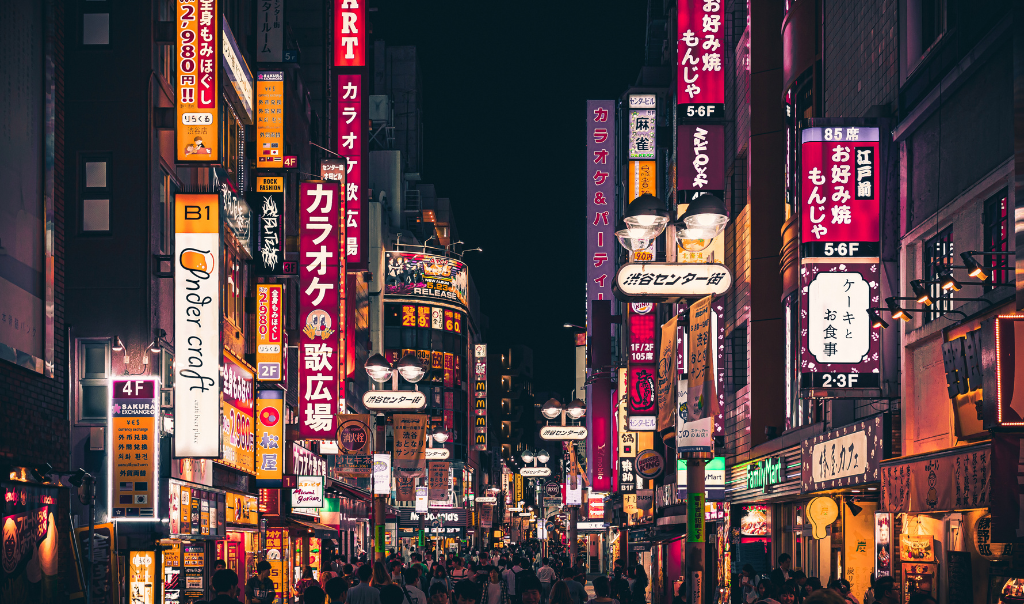
Japan visa 2026: complete guide to visas and procedures
Tourist exemption, work visa, digital nomad, student, WHV, family reunion. Everything you need to know to enter and stay in Japan.
Type
Visa Exemption
Duration
90 days
Cost
Gratuit
Processing
À l'arrivée
Japan has a relatively open visa policy for short tourist stays, with visa exemptions for 68 nationalities (including France, Belgium, Switzerland, Canada, USA, UK, Germany and Australia). For long-term stays, the Japanese visa system is more structured and demanding. Here is a comprehensive overview of each visa type available, with conditions, costs and procedures.
Documents
- Passeport valide
- Billet retour
- Preuve de fonds
Digital nomad visa : Available
Digital Nomad Visa
6 mois
~$50
- Revenu min $68,000/an
- Assurance santé
- Travail à distance uniquement
Visa exemption (tourism, under 90 days)
Citizens of 68 countries can enter Japan without a visa for tourist stays of up to 90 days. This includes France, Belgium, Switzerland, Canada, Germany, Spain, Italy, the Netherlands, the USA and the UK.
Requirements: valid passport for the entire stay, return or onward ticket, proof of accommodation recommended, sufficient funds. No paid work is allowed.
Good to know: the exemption is 90 days for most European nationalities, but only 15 days for Thai nationals or 30 days for some countries. Always check the specific conditions for your passport on the Japanese Ministry of Foreign Affairs (MOFA) website.
Work visa (employment)
Japan offers over 15 categories of work visas, each linked to a specific type of activity. The most common are:
- Engineer/Specialist in Humanities/International Services: the most frequent visa for qualified foreigners. Engineers, developers, translators, in-house language teachers, international marketers.
- Intra-company Transferee: transfer within an international company to a Japanese subsidiary.
- Skilled Labor: chefs, artisans, pilots, jewelers. Requires minimum 10 years of experience.
- Highly Skilled Professional (HSP): points-based system launched in 2012. If you reach 70 points (age, degree, salary, experience), you get benefits: accelerated permanent residency (1-3 years instead of 10), authorization to bring a parent or domestic worker.
Procedure: your Japanese employer files a Certificate of Eligibility (COE) with Japanese immigration. Processing: 1-3 months. Once the COE is obtained, you apply for the visa at the Japanese embassy in your country. The visa is usually issued within 5 business days. Cost: free for French nationals (bilateral agreement), about $25-50 for other nationalities.
Digital nomad visa (April 2024)
Since April 2024, Japan offers a digital nomad visa for a duration of 6 months, non-renewable. This is a major step forward for remote workers.
Requirements:
- Minimum annual income of 10 million yen (approximately $67,000 or EUR 60,000)
- Private health insurance covering Japan
- Working for an employer or clients outside Japan
- Nationality of one of the 49 eligible countries (including France, Belgium, Switzerland, Canada, USA, UK, Germany, Australia)
Benefits: no income tax in Japan (you remain taxed in your home country), possibility to bring spouse and children.
Limitations: maximum 6 months with no renewal on site. You must leave Japan and wait before reapplying. The high income threshold excludes many beginner freelancers.
Student visa
The student visa allows you to attend courses at a university, Japanese language school, vocational school or research program in Japan.
Requirements: admission letter from an approved institution, proof of funds (approximately 1.5-2 million yen per year, about $10,000-13,000), permission to work 28h/week with a special permit. Duration: 1-2 years, renewable.
Tip: Japanese language schools are an excellent way to get a long-term visa while learning the language. Many future expats start this way before looking for a job on site.
Working Holiday Visa (WHV)
Japan has WHV agreements with 26 countries, including France, Canada, Australia, Germany, the UK and Belgium.
Requirements:
- 18 to 30 years old (35 for Canadians and Australians)
- Sufficient funds: approximately EUR 3,100 (or CAD 4,200)
- Health insurance for the entire stay
- Return ticket or funds to purchase one
Duration: 1 year, non-renewable. Quota: France has 1,500 places per year (applications usually open in October/November). Canada has a quota of 6,500 places.
Benefits: full freedom to travel and work. Many WHV holders work in hospitality, French teaching or ski resorts.
Spouse of Japanese national visa
If you are married to a Japanese citizen, you can obtain a spouse visa. This visa gives unrestricted access to the job market, with no sector limitations.
Duration: 1, 3 or 5 years, renewable. After 3 years of marriage and 1 year of residence in Japan (or 3 years of residence), you can apply for permanent residency.
Long-term stay and permanent residency
Permanent residency in Japan is generally obtained after 10 years of continuous residence. For Highly Skilled Professionals, this is reduced to 1 or 3 years.
Requirements: good conduct, financial stability, contribution to Japanese society, payment of taxes and social contributions. Japan does not grant dual nationality: if you naturalize as Japanese, you must give up your original nationality.
Common mistakes to avoid
- Working on a tourist visa: even remote work can be problematic. The digital nomad visa exists precisely for this.
- Overstaying: Japan is very strict on overstays. Even 1 day late can result in a 5-year entry ban.
- Forgetting the Certificate of Eligibility: for work visas, the COE is essential. Without it, the embassy will reject your application.
- Not getting health insurance: mandatory for WHV and digital nomad visa, strongly recommended for all others.